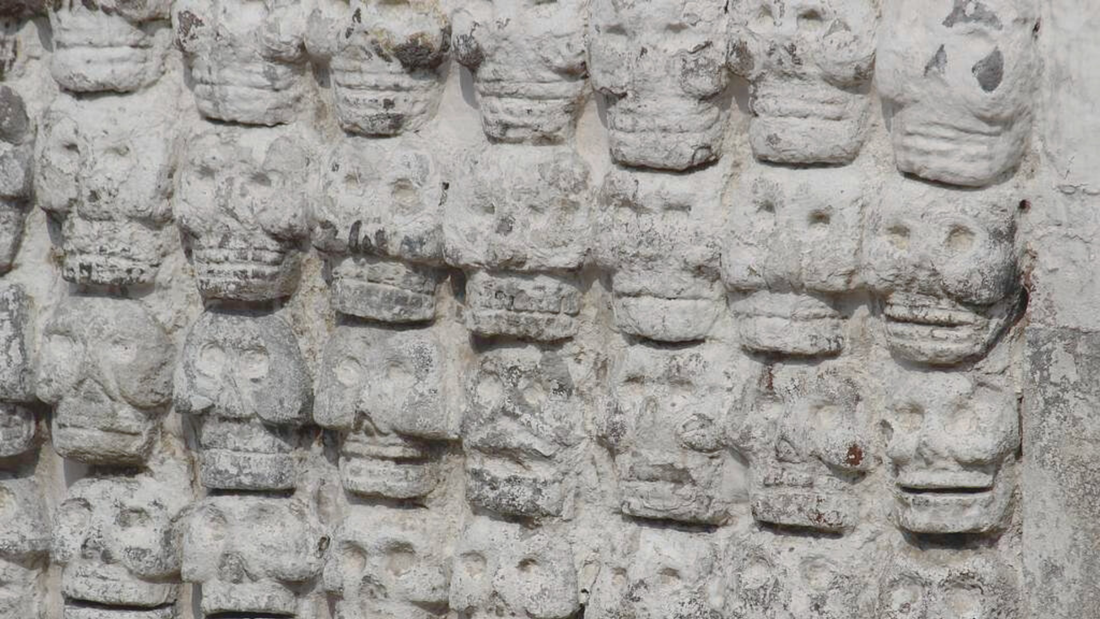
Tzompantli
Share
By Iván Del Rivero
Today we understand that in Mesoamerica, death was not the final destination, but a sacred choreography between the eternal and the fleeting. A ritual dance whose profound meaning we still decipher today, guided by the bones that have withstood the passage of time.
There stands the tzompantli. A structure of horror and reverence, where skulls formed rows suspended on a kind of altar erected with patience, order, and intention.
Although its name is often translated as "row of skulls," that expression barely touches upon its profound meaning. It was, in itself, a fierce celebration of life given and death claimed.
Each skull impaled on its stakes was a testament to a completed cycle, a life offered to the gods to maintain the balance of the cosmos. The tzompantli was not meant to instill fear, but to remind us of the sacred role of sacrifice.
It was, at once, a mirror and a boundary, a symbolic threshold between the earthly world and the divine realm. Those who contemplated it saw not only human remains, but a structured vision of the universal order, where death had purpose, place, and meaning.