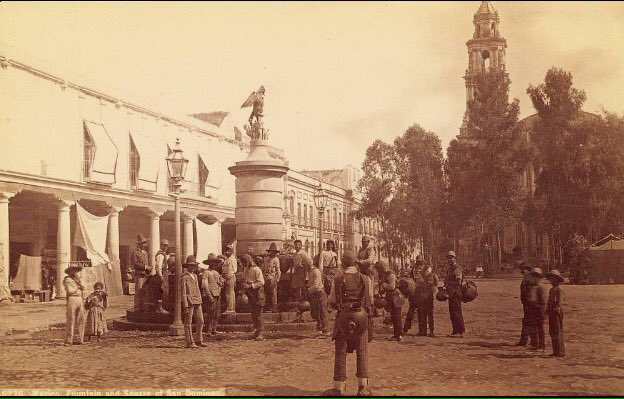
Plaza de la Aguilita
Share
By Iván Del Rivero
In a discreet corner of the Historic Center, on the pedestrian street Talavera and very close to the old Ex-convent of La Merced, a small space opens up destined for the Plaza de la Aguilita.
Legend has it that it was here that the Mexica, after a long pilgrimage, saw the sign the gods had promised: a majestic eagle perched on a cactus, devouring a snake. This vision gave birth to the great Tenochtitlán, the city that would later rise to become the heart of this country.
La Aguilita, surrounded by cars, shops, and concrete, remains like a whisper of the past, reminding us of where we come from. In its modesty, it contrasts with the grandeur of the Zócalo, but its history is perhaps even more foundational.
It is a turning point in time, a place where myth became geography. Today, despite the bustle of passersby who are unaware of its significance, the square retains a quiet energy, a kind of sacred echo that refuses to be forgotten.
By walking through it carefully and patiently, it is possible to imagine those exhausted warriors witnessing the divine omen that put an end to their long and arduous journey.
It's a reminder that, in Mexico City, history hides in the most unexpected places, waiting to be discovered. Plaza de la Aguilita is not just a monument; it's a portal to the origins of a nation, a starting point that has become eternal.