Industrial
Share
The Industrial Colony is not what its name suggests. There are no smoking factories or rows of chimneys; what you will find are houses from the 1940s with a simple and sturdy design, neighborhood bakeries with a delicious aroma, old trees with wise branches, and above all, a calm that resists the frenzy of the Mexican capital.
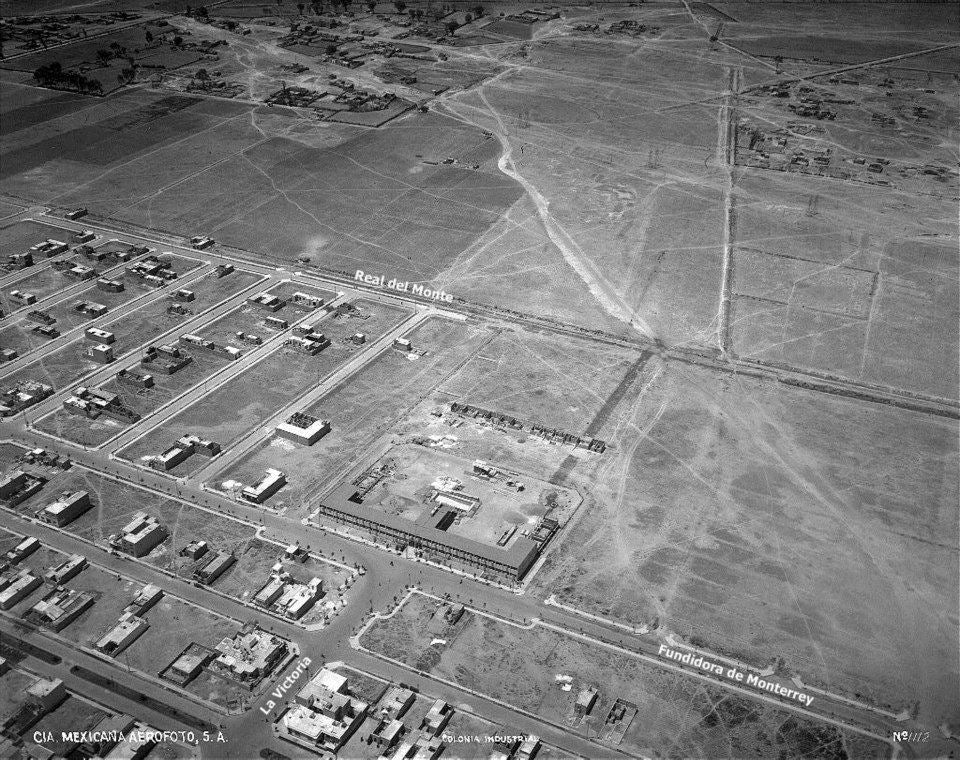
The Industrial neighborhood was designed as a modern and functional project in the first half of the 20th century. This ambitious plan resulted in wide, easily navigable streets. The neighborhood was officially subdivided in 1926, and one of its distinctive features was that the streets were named after industries experiencing industrial growth in the country at the time.
There was “La Fama” street, named after a famous tobacco company run by Don Antonio Delgado Rentería, “La Constancia”, the pride of Torreón, “La Corona”, an industrial symbol of Mexico City to this day, and the emblematic “Río Blanco”, which since 1899 in Orizaba, Veracruz, became a standard-bearer of the labor movement and the nucleus of the installation of “Rincón Grande”, a hydroelectric plant that would change the energy course of Mexico.
The street “Necaxa,” another distinguished name, commemorates the hydroelectric plant built in 1906 to supply electricity to Mexico City and beyond, from its base in Huauchinango, Puebla. There are also “Euzkaro,” “Eureka,” “Larín,” “La Victoria”… each street a story, each name a piece of the industrial puzzle of 1920s Mexico.