The Sun by Kiyoshi Takahashi
Share
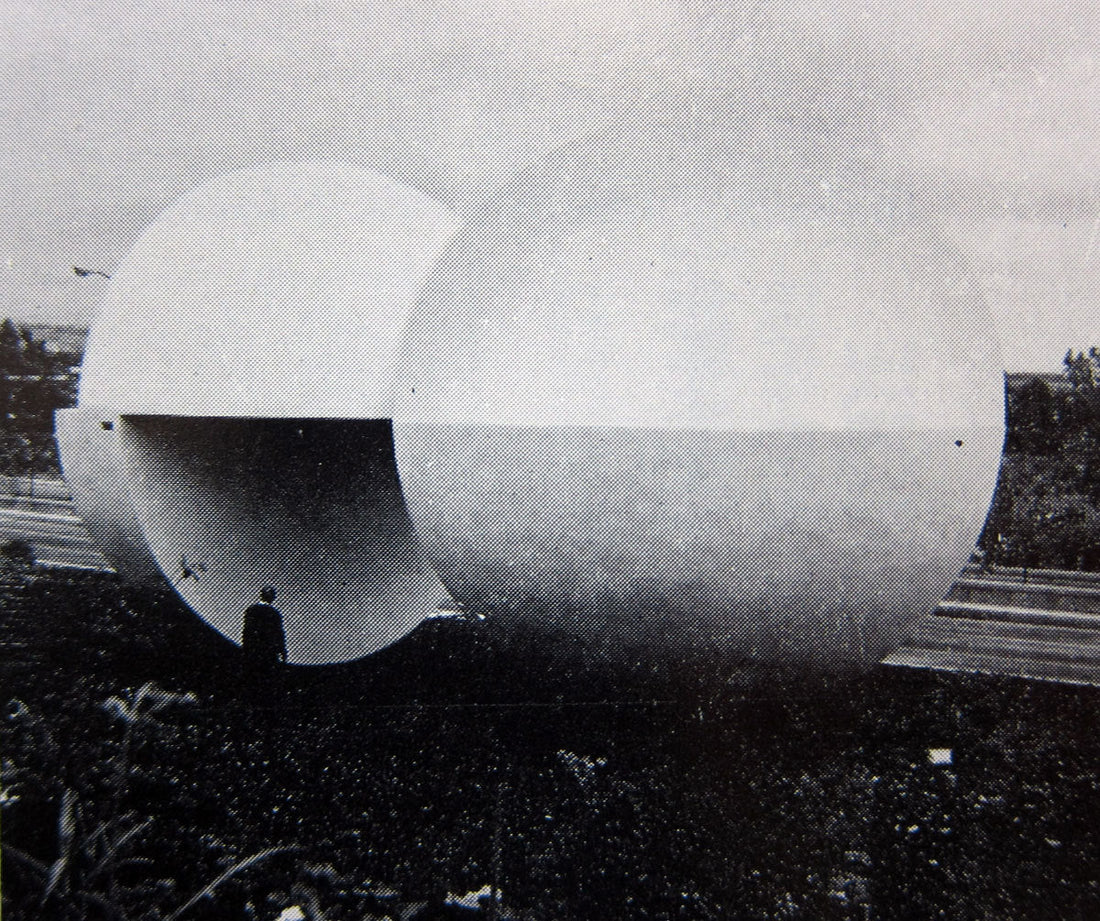
In the urban landscape of southern Mexico City, a white sculpture continues to revolve in the collective memory: two sectioned spheres, suspended in time, that appear to move when the car advances.
It is called Sol, and it was created in 1968 by the Japanese artist Kiyoshi Takahashi as part of the Friendship Route, that constellation of monuments that celebrated the Olympic Games from a vision of modernity and international dialogue.
Crafted in Japan with the same meticulous care as a sculpture, its design embodies the idea of contained movement, of energy that lingers. Its minimalist form is reminiscent of Japanese aesthetics, where simplicity is a path to depth. However, its purpose was global: to connect cultures through monumental art.
Sol was restored and preserved in its first stage thanks to the joint encouragement of numerous institutions, as if many hands were joining together to protect the flame of a shared memory.
After its relocation, it rose again with renewed dignity in 2013, when the then Japanese ambassador, Shuchiro Megata, presided over its reopening. In that symbolic act, the essential thing was to keep its spirit alive, not allowing the passage of time to obscure its origins.
After creating Sol for the Route of Friendship, Takahashi found a home in the city of Xalapa, Veracruz. There, amidst mists and mountains, he immersed himself in the echoes of pre-Hispanic Mexico, later pouring his spirit into the flourishing of the country's modern art.
Today, more than 50 years after its creation, the immaculate white of this magnificent Sun radiates a tranquility that contrasts with the chaos of the city and is undoubtedly a landmark that evokes an era of optimism and cooperation.