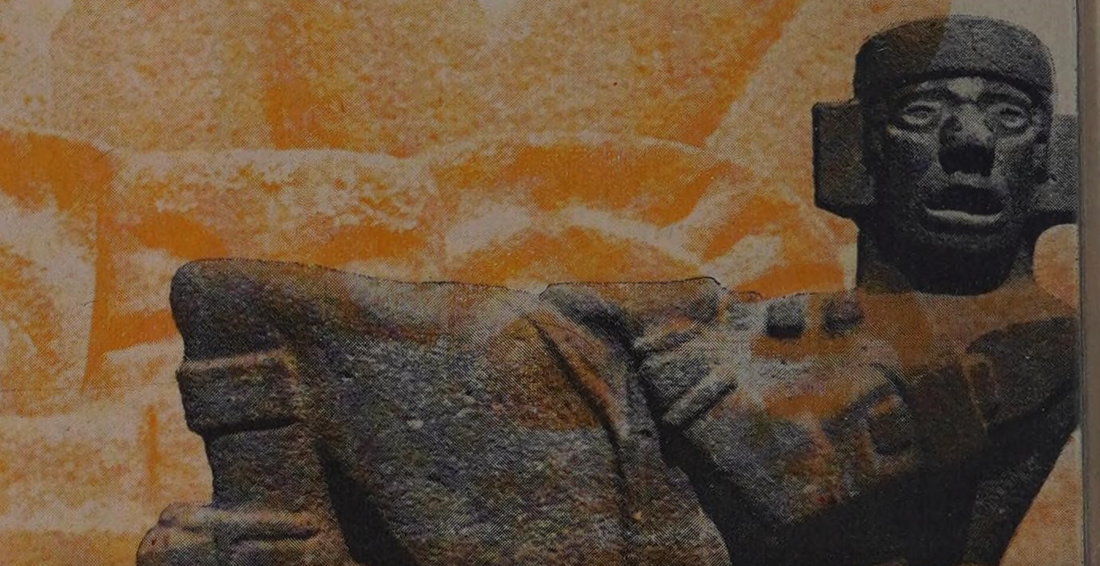
Chac Mool
Share
By Iván Del Rivero
An imposing figure greets you in the solemn dimness of the Maya Hall at the National Museum of Anthropology. It rests with dignity, its face turned toward eternity, and upon its belly, a vessel that once held sacred offerings. It is the Chac Mool, the motionless guardian of a vibrant and mysterious past.
Its discovery in 1875 was the work of a foreign adventurer: Augustus Henry Julius Le Plongeon, who unearthed it in the ruins of Chichen Itza, among rubble covered by the jungle. Le Plongeon, a photographer and enthusiast of esoteric theories, believed that the Chac Mool represented the legendary continent of Atlantis. He wanted to take it to the World's Columbian Exposition in Philadelphia as proof of his theories, but the governor of Yucatan claimed the sculpture for the Mexican nation, recognizing its symbolic and cultural value.
Despite the explorer's pressure, the Chac Mool was confiscated and sent to the capital where it began its new destiny: to become an essential support of our cultural heritage, a tangible symbol of the link between the pre-Hispanic world and the contemporary identity of Mexico, which still resonates in our deepest roots.
Today, its silent presence deeply resonates with thousands of visitors, inspiring awe, respect, and an intimate connection to our roots. It reminds us of the complexity, spirituality, and grandeur of the original civilizations, whose echoes still resonate among us. The Chac Mool, with its enigmatic expression and eternal vigil, is a living testament to an ancestral worldview.